
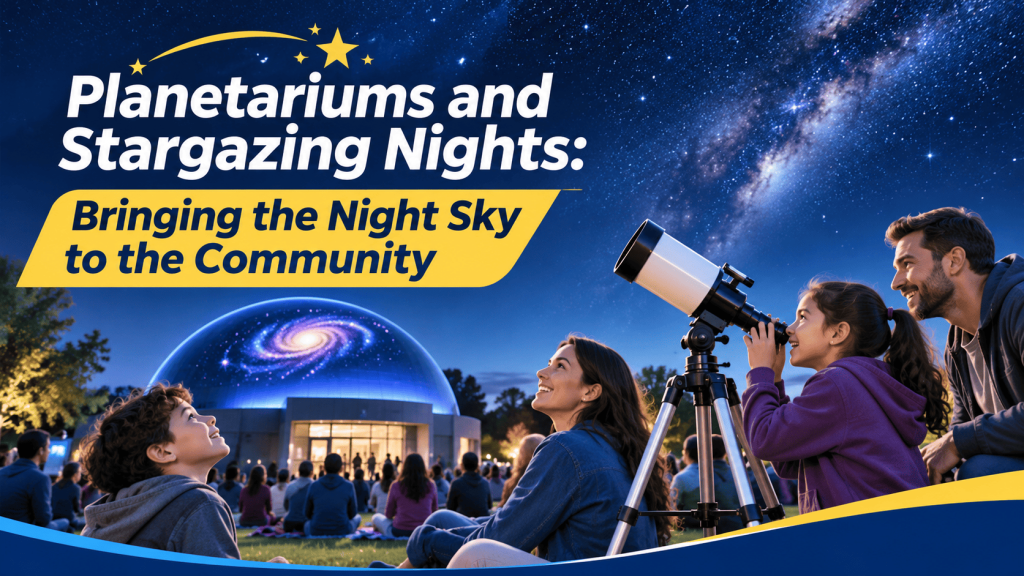
Few experiences spark curiosity like seeing Saturn’s rings through a telescope or watching a dome fill with stars. Planetariums and astronomy clubs offer these moments to families, students, and adults of all ages.
Yet many people never hear about upcoming shows or public observing nights. Clear, timely information helps more people look up.
Publish Clear Event Calendars
List each show or observing night with dates, times, ticket prices, age recommendations, and short descriptions. Explain what visitors will see, such as constellations, planets, or a meteor shower.
For outdoor events, explain weather policies clearly, since cloudy skies can cancel observing. Share how cancellations are announced.
Highlight special events like eclipses, planetary alignments, or meteor showers well in advance.
Prepare First-Time Visitors
Explain stargazing etiquette in friendly terms: use red flashlights, avoid phone screens near telescopes, and dress warmly for night temperatures. Describe accessibility at observing sites and the dome.
Offer beginner programs explaining how to use binoculars or choose a first telescope, and invite visitors to join astronomy clubs.
Science centers and clubs listed in the Science category on Craigs Web Directori can share event calendars and locations in their listings, helping families discover nights under the stars.
Build Community Connections
Partner with schools, libraries, and parks for outreach events. Share dark sky tips that help reduce light pollution in the community.
Post photos and highlights after events to encourage future attendance. Sharing astrophotography taken by members also shows newcomers what is possible with patience and modest equipment.
Conclusion
Planetariums and stargazing events inspire wonder and learning. Publish clear event calendars, prepare first-time visitors, and build community connections. Accurate information on your website, Google profile, and directories such as Craigs Web Directori helps curious people find their next night under the stars.
Frequently Asked Questions
What happens at a public stargazing event?
Volunteers or staff set up telescopes, point out objects in the sky, and answer questions. Events are often free or low cost.
What if the sky is cloudy?
Outdoor observing may be canceled or moved indoors. Check event pages for weather updates.
Why use a red flashlight at star parties?
Red light preserves night vision for you and others looking through telescopes.
Are planetarium shows good for young children?
Many shows are family-friendly. Check age recommendations and show lengths.
How can I start learning astronomy?
Attend local club events, use binoculars, and try beginner programs at planetariums.